A Modern Technique for Producing Ideas

There’s a less famous side to the Dunning-Kruger effect that doesn’t get talked about enough.
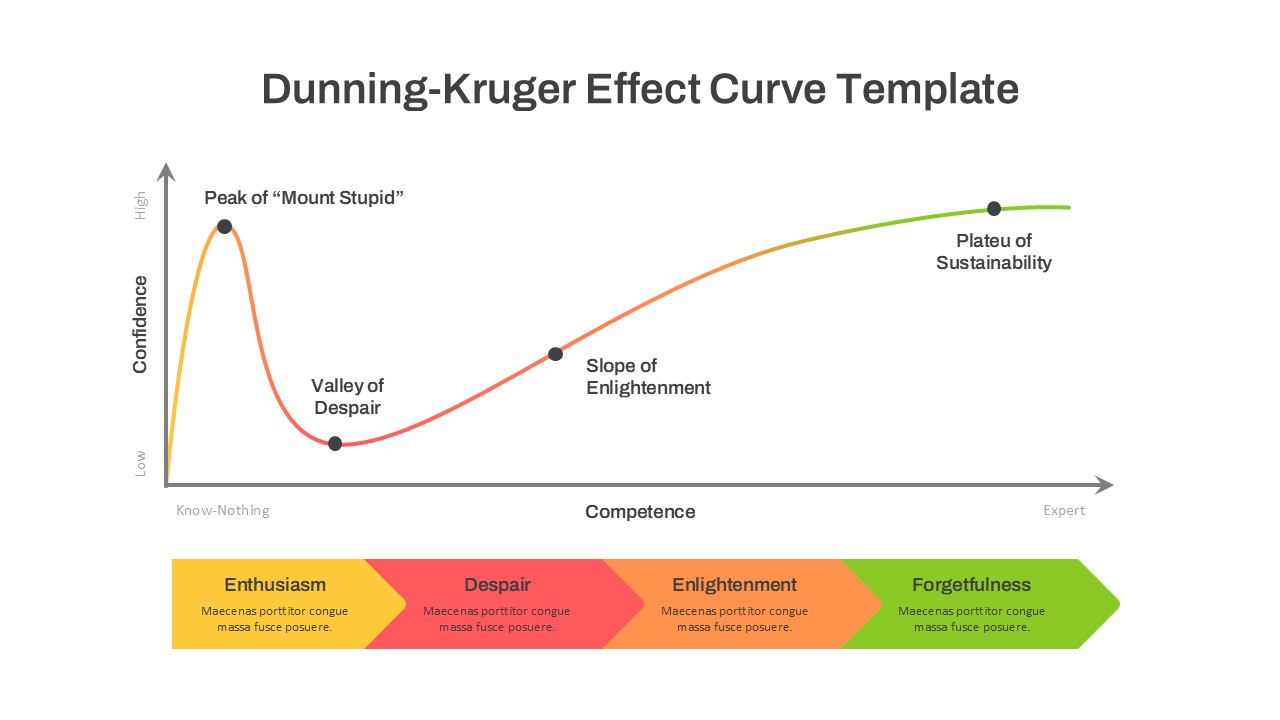
We all know the first part. People with limited knowledge in a subject tend to overestimate their competence. It’s the loudest voice in the room, confident about everything, expert in nothing. You’ve seen it. I’ve seen it. Social media runs on it.
But there’s a second part. Experts tend to underestimate their own competence. They assume that what comes easily to them must come easily to everyone. So they stay quiet. They hesitate. They think: who am I to write about this?
I live in that second part.
People tell me I know a lot. I’ve spent more than 15 years working at the intersection of technology, data, creativity, and strategy. Entertainment, advertising, product, gaming, business intelligence, startups, enterprise. I’ve built things, broken things, taught things. But honestly? Most days I feel like I know very little. And that feeling, combined with a very real tendency toward perfectionism and impostor syndrome, creates a specific kind of paralysis when it comes to writing.
I have ideas. I make connections. I see patterns across disciplines that others don’t always see. But sitting down to write them with confidence? That’s where the friction lives.
And yet. People benefit from the exchange. Conversations, mentoring sessions, teaching moments. The feedback is consistent: this is valuable, you should share more. So the question becomes practical: how do you build a process that gets the thinking out consistently, even when the inner voice keeps saying you don’t know enough?
This article is about the process I’ve built. And because I spend my time advocating for deliberate, transparent AI adoption, I want to be equally transparent about how AI is part of that process.
A book from 1939
I’ve worked in advertising. Creative side, production side. And one of the books that stayed with me is James Webb Young’s “A Technique for Producing Ideas.” It’s a small book. Written by an advertising man in 1939, with a foreword by William Bernbach.
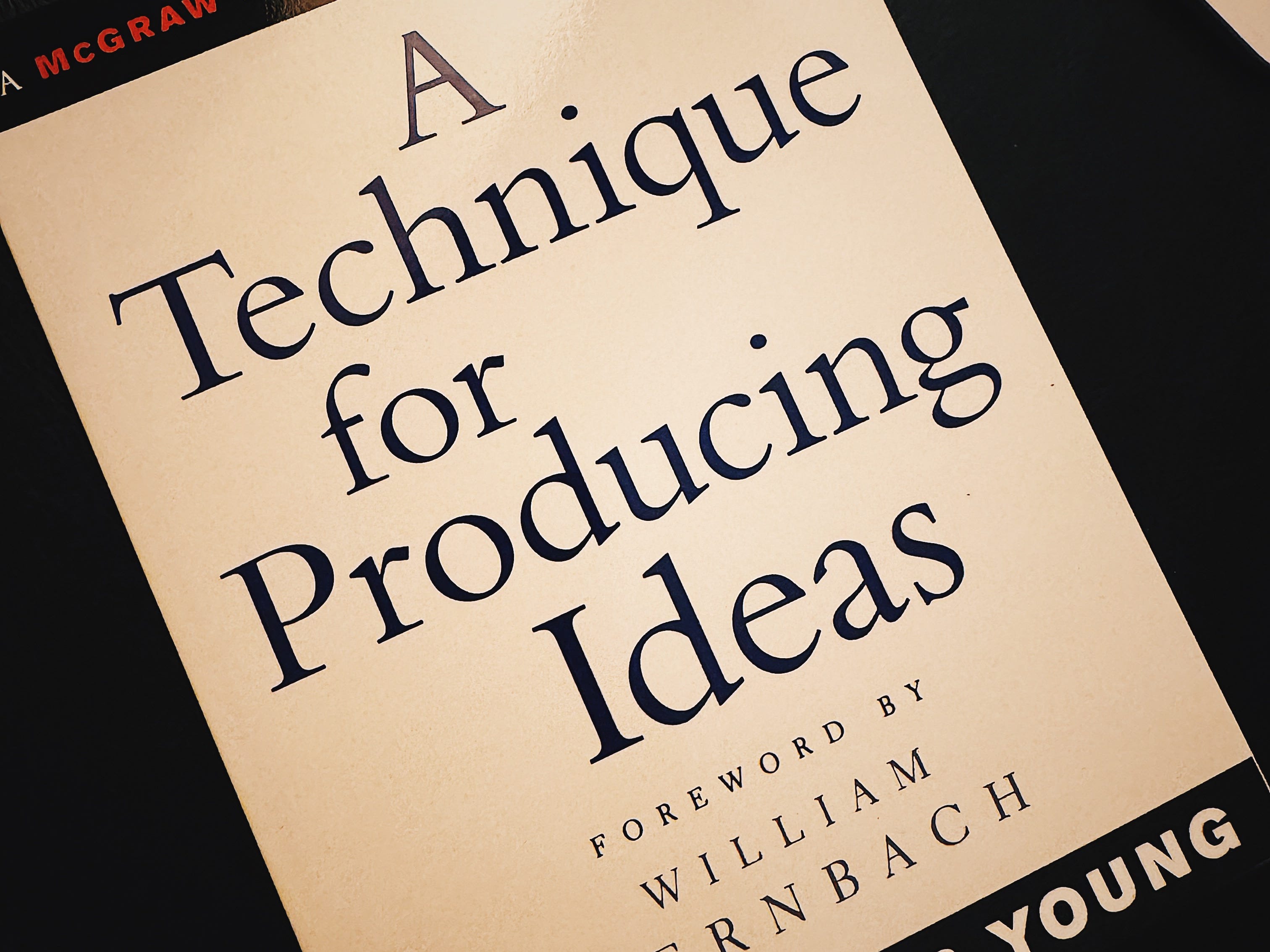
Young describes the creative process in five steps. Gather raw material. Digest it. Let it incubate. Wait for the connection to appear. Then shape and develop the idea into something real.
The book is almost a century old. The process still holds. What’s changed, significantly, is what’s available to support each step. But the fundamentals? The human part? That stayed the same.
I keep coming back to this because it frames everything I’m about to describe. The tools I use today would have been unimaginable to Young. But the underlying process, the way ideas actually get produced, follows the same arc he described. Gather, digest, incubate, connect, shape.
Gathering raw material
Here’s the honest reality of how my ideas start: scattered.
I have notes everywhere. Apple Notes, Obsidian, Antinote, Apple Pages. Sometimes Voice Notes. It depends on the moment, the format, the type of idea, where I am when it hits me. There’s no single system because thinking doesn’t happen in a single system.
The connections exist in my head. I can feel them. But resurfacing them later? That’s the hard part. I have the information, sometimes in multiple places, but retrieving it when I need it is the real bottleneck.
Over the past year or so I started using MacWhisper for voice dictation. The reason is simple: I think faster than I can type. Stream of consciousness dictation, usually mixing Spanish and English because that’s how my brain works, lets me get the raw thinking down before it disappears. It’s fast. It’s messy. And it captures things that would otherwise stay locked inside.
But I still write too. Pen and paper. Keyboard. Apple Pages. When I need something more deliberate, more measured. There’s a different quality to slow writing, and I don’t want to lose that.
Two modes of capture for two modes of thinking. Speed when I need to dump everything out. Patience when I need to sit with an idea.
I’m still working on this part of the workflow, honestly. How to make the resurfacing better. How to connect the dots across all these places where ideas live. It’s a work in progress and I’m okay with that.
Digesting and shaping
This is where AI enters the process.
Not at the idea stage. Not to generate what I should think about or what I should say. AI comes in when raw thinking needs structure. When the brain dump is done and now I need to turn it into something someone else can follow.
I’ve built a custom content assistant that I continue developing and refining. The primary model I work with right now is Claude Sonnet 4.6. TypingMind is where I maintain this assistant and others I’ve developed for different disciplines. But it’s not the only environment where I work with AI.
What the assistant actually looks at
Building this assistant wasn’t a one-time setup. It took several iterations to get right, and it’s still evolving.
The core of it is a detailed set of system instructions that I wrote and continue refining. Think of it as a document that teaches the AI how I think, how I write, and what to watch for. It has versioning, just like software. The current version is 2.5.1. There were earlier versions that didn’t work well. Version 2.2 was too vague, it referenced my brand voice but didn’t really embody it. Maybe 50% accuracy. Version 2.4 went the other direction, over-systematized everything with mandatory reasoning frameworks, and completely lost my authentic voice. Zero percent. It tried to force linear structure on thinking that is fundamentally spiral.
That failure taught me something important. My thinking pattern goes context, framework, application, then circles back with a deeper layer. Not premise, evidence, conclusion. When the assistant tried to force the linear path, it stopped sounding like me entirely.
So what does the current version focus on? A few things:
Voice identity. The assistant is trained on years of my actual output. LinkedIn posts, articles, university lectures, podcast interviews, content in both English and Spanish. It knows my vocabulary, my rhythm, my tendency to connect seemingly unrelated dots. It recognizes phrases I naturally use and patterns I fall into. And just as importantly, it has a list of things I never say. Words and structures that sound like AI wrote them. “Leverage,” “paradigm shift,” “it’s important to note,” that kind of thing. If those show up in a draft, the assistant flags them.
Thinking patterns. It respects how I build ideas: in spirals, not straight lines. It knows I start with context, move to a conceptual frame, then to practical application, then circle back to the original idea with a new layer. It doesn’t try to flatten that into a five-paragraph essay.
Platform awareness. A LinkedIn post has a different structure and depth than a Substack article. The assistant knows the difference and adapts accordingly, from character counts to paragraph length to how engagement questions should feel.
Anti-perfectionism. This one is personal. I built in a protocol that, after a few rounds of refinement, gently reminds me that shipping beats perfecting. Because I know myself. I can iterate forever if nothing stops me.
All of these components are documented separately. The voice analysis, the vocabulary patterns, the editorial guidelines, the prohibited patterns. It’s a system I’ve assembled piece by piece over time, and I expect it to keep changing as I learn more about what works and what doesn’t.
The workflow in practice
The brain dump goes in, and a back and forth begins. The assistant helps me structure ideas, challenges my own thinking, refines drafts against my documented voice and editorial guidelines. Sometimes it takes multiple rounds until the piece says what I actually mean. Not just what sounds good, but what I actually mean.
This collaboration is deliberate. I don’t have an automated pipeline where ideas go in one end and content comes out the other. I choose to work alongside AI at every step, making decisions as I go. That’s intentional. The manual friction is part of the quality.
The broader toolkit
For research I use Perplexity and Exa, depending on what I need. For technical projects, VS Code with Claude Code. The specific models and tools evolve as the landscape moves. What stays consistent is the process and the intention behind it.
In the Substack articles where I’ve used AI as part of the writing process, I include a tech stack section at the bottom. Listing the specific tools used for that particular piece, from the dictation software to the AI models to whatever else was involved. In the pieces I’ve written entirely on my own, I’ve tried to make that clear too, though I’ll admit I could push that further.
On LinkedIn, I haven't been as consistent about this. I shared the process publicly almost a year ago, in a post about how I built my content assistant, and the response was encouraging. People appreciated the honesty. A lot has evolved since then. The tools, the assistant, the workflow, my own understanding of how to work with AI deliberately. This article is an expansion of that original thinking and a more complete picture of where the process stands today. Going forward, the idea is to link to this piece from my newsletter and other content so the transparency is always accessible, not buried.
What AI does and what it doesn’t
Let me be direct about this.
What AI does in my process: it captures and organizes my spoken brain dumps into workable structure. It serves as a thought partner during drafting and editing. It helps me process brain dumps that come in mixed Spanish and English and shape them into coherent pieces for a specific audience. It checks drafts against my documented voice and editorial guidelines. It assists with research synthesis when I’m working on deeper pieces like The Slow Lens.
What stays with me: the ideas. The opinions. The perspective. The editorial judgment. What to publish, how to frame it, what stays and what goes. The thinking that comes from more than 15 years working across entertainment, advertising, product, gaming, BI, startups, and enterprise operations. AI doesn’t replace that. It helps me get that thinking out of my head and into something others can actually read.
I remain the absolute owner of the ideas, the message, and the critical thinking. I always review, edit, and guide the final output.
Why I share this
I come back to Young’s five steps. Gather, digest, incubate, connect, shape. The process he described is fundamentally human. AI changes what’s available at each step, dramatically. But the thinking, the judgment, the responsibility for what you put out into the world? That stays with the person.
And I come back to that Dunning-Kruger tension. I still feel like I don’t know enough. That hasn’t changed and it probably won’t. But I’ve built a process that gets the ideas out anyway, because the evidence says other people benefit from them. Being transparent about how that process works is part of the same commitment to deliberate, honest AI adoption that The Slow Lens is about.
I take full responsibility for everything I publish. I share this not because anyone requires it, but because I advocate for transparency in AI adoption and I practice what I advocate.
This process will keep evolving. The tools will change. The workflow will get better. But the principles stay: the ideas are mine, the judgment is mine, the responsibility is mine. AI is part of the process, and I’m glad it is. It helps me do something I struggled to do on my own for a very long time: share what I have in my mind.
Tech Stack for This Article
Creating this piece involved a blend of human reflection and technological assistance. Here are the key tools used in the process:
MacWhisper: For capturing initial thoughts (in Spanish and English) via stream-of-consciousness dictation, feeding raw thinking directly into the AI collaboration process.
Claude Opus 4.6 (via claude.ai): The primary AI collaborator for this piece. Took dictated brain dumps and supported the writing process end-to-end: structuring ideas, serving as a thought partner, challenging my framing, refining drafts against my documented voice guidelines, and iterating through multiple rounds until the piece reflected what I actually meant.
what I love about this, is that it’s the process for discovering and articulating the Thin Slice. the wild thing is that we can write about the Thin Slice; but we can’t ever write the thin slice; or it won’t be ours anymore.
This is interesting Alvaro. I go through a similar process - Gather, digest, incubate, connect, shape. I use Claude Projects. When I've already connected the dots, I need Claude to help me shape the language and find the right angle. I write short pieces at spur of the moment so I don't feel that need to use Exa and Perplexity. I thought the latter is a great idea for researching long-form thinking pieces!